The Complete Guide to Central Florida Trees and Landscaping Design Best Practices
Key Takeaways and Insights
Top Tree Recommendations for Central Florida (Zones 9a-10a):
- Live Oak: Most hurricane-resistant large tree, 100+ foot spread, supports 500+ butterfly/moth species
- Japanese Blueberry: Best privacy screen option, columnar growth, minimal maintenance required
- Crape Myrtle: Top summer color tree, disease-resistant modern varieties, blooms June-September
- Sabal Palm: Florida’s state tree, survives Category 5 hurricanes, supports 50+ bird species
Critical Design Distance Guidelines:
- Large trees (Live Oak, Magnolia): 20-40 feet from structures
- Medium trees (Crape Myrtle): 10-15 feet from buildings
- All trees: 25-30 feet minimum from septic drain fields
- Trees near power lines: Only plant species under 25 feet tall
Water Management Insights:
- Newly planted trees: Water every 2-3 days for first 2 weeks, then weekly
- Establishment rule: 1 year per inch of trunk diameter
- Established native trees: Minimal irrigation needed except during 4+ week droughts
- Never use over 3 inches of mulch; maintain 6-12 inch mulch-free zone around trunks
Hurricane Resistance Rankings:
- Highest resistance: Live Oak, Sabal Palm, Bald Cypress, Southern Red Cedar
- Avoid in hurricane zones: Laurel Oak, Water Oak, Queen Palm (weak wood/shallow roots)
- Proper pruning every 3-5 years more important than species selection
Cost-Effective Planting Strategy:
- Small trees (7-15 gallon): $200-500 installed
- Medium trees (25-45 gallon): $500-1,500 installed
- Large specimens (65-100 gallon): $1,500-5,000+ installed
- Fall/winter planting (Oct-Feb) reduces irrigation costs and stress
Wildlife Value by Species:
- Live Oak: Hosts 500+ insect species feeding birds
- Native palms: Feed 50+ bird species
- Citrus: Hosts giant swallowtail butterflies
- Southern Red Cedar: Berries feed 50+ bird species
Unique Central Florida Challenges Addressed:
- Deep planting is the #1 cause of tree failure (root flare must be visible)
- Sandy soils require organic amendments at 25% volume for best results
- Summer planting faces fungal disease risk; fall planting has 3x better success rate
- Citrus greening disease requires resistant varieties or alternative fruit trees
Trees to Absolutely Avoid:
- Chinese Tallow, Melaleuca, Australian Pine, Brazilian Pepper (invasive/prohibited)
- Laurel Oak, Water Oak (weak wood, storm damage, 50-70 year lifespan)
- Queen Palm (freeze-sensitive, hurricane-vulnerable)
- Leyland Cypress (develops fatal diseases in Florida humidity)
Florida-Friendly Certification Requirements:
- 9 core principles including right plant/right place and water efficiency
- Native plants require 50% less water and fertilizer than non-adapted species
- Proper plant grouping (hydrozones) can reduce irrigation costs by 30-40%
Container Growing Breakthrough Information:
- Citrus, dwarf avocado, and fig trees thrive in 20-25 gallon containers
- Container trees need daily watering in summer vs. weekly for ground-planted
- Root pruning and repotting every 2-3 years maintains health
Introduction to Central Florida’s Unique Landscape Environment
Central Florida presents a distinctive set of opportunities and challenges for homeowners landscape designers and tree service companies. The region’s subtropical climate, characterized by hot humid summers, mild winters, and substantial rainfall from June through September, creates an ideal environment for a diverse array of tree species. Understanding which trees thrive in USDA hardiness zones 9a through 10a is essential for creating sustainable, beautiful landscapes that withstand Florida’s unique weather patterns including occasional freezes, intense summer heat, and hurricane-force winds.
The selection of appropriate tree species combined with strategic landscape design practices can significantly enhance property values, reduce energy costs through strategic shade placement, and create outdoor spaces that remain attractive year-round. This comprehensive guide explores the best tree varieties for Central Florida and provides detailed best practices for designing landscapes that are both aesthetically pleasing and environmentally responsible.
Native Trees of Central Florida: The Foundation of Sustainable Landscaping
Live Oak (Quercus virginiana)
The majestic live oak stands as perhaps the most iconic tree in Central Florida landscapes. These evergreen oaks can live for centuries and develop massive canopies that spread wider than their height. Live oaks typically reach 40 to 80 feet in height with spreads that can exceed 100 feet at maturity. Their dense, dark green foliage provides exceptional shade year-round, and their extensive root systems make them remarkably hurricane-resistant.
Live oaks adapt to various soil types and tolerate both drought and occasional flooding once established. Their slow to moderate growth rate and eventual size require careful placement in landscapes, with adequate space to accommodate their mature spread. These trees work exceptionally well as standalone specimen trees, along property lines where space permits, or in large open areas where their full grandeur can be appreciated.
Slash Pine (Pinus elliottii)
Slash pines represent Central Florida’s native conifer, growing naturally throughout the region’s flatwoods and providing important ecological functions. These fast-growing evergreens can reach heights of 60 to 100 feet with a narrower spread of 20 to 40 feet, making them suitable for areas where vertical interest is desired without excessive lateral growth.
The slash pine’s long needles create a distinctive texture in the landscape, and their orange-brown bark provides visual interest. These pines prefer well-drained sandy soils and full sun exposure. They serve as excellent windbreaks and privacy screens while providing habitat for native wildlife including pine warblers, brown-headed nuthatches, and fox squirrels.
Bald Cypress (Taxodium distichum)
Despite its name, the bald cypress is deciduous, dropping its feathery needles in winter to reveal an attractive branching structure. These adaptable trees thrive in both wetland conditions and well-drained soils, making them versatile choices for various landscape situations. Bald cypress trees can grow 50 to 70 feet tall with pyramidal shapes when young that broaden with age.
The distinctive feature of bald cypress includes the development of “knees” or pneumatophores when grown in wet conditions, though these typically don’t develop in drier landscape settings. Their fine-textured foliage turns rusty orange in fall before dropping, providing seasonal color. These trees work well near ponds, lakes, or in rain gardens, but also perform admirably in traditional landscape beds.
Sabal Palm (Sabal palmetto)
As Florida’s state tree, the sabal palm or cabbage palm is supremely adapted to Central Florida conditions. These palms typically grow 40 to 50 feet tall with fan-shaped fronds creating a distinctive tropical appearance. Sabal palms tolerate salt spray, drought, poor soils, and strong winds, making them one of the most resilient landscape choices available.
These palms require minimal maintenance once established and their single trunks create strong vertical accents in the landscape. They work well as specimen plants, in groupings of varying heights, or lining driveways and property boundaries. Sabal palms support native wildlife, with their fruits providing food for birds and their fronds offering nesting sites.
Southern Magnolia (Magnolia grandiflora)
The southern magnolia brings elegance and fragrance to Central Florida landscapes with its large, glossy evergreen leaves and spectacular white blooms. These trees grow 60 to 80 feet tall with pyramidal to rounded forms and spreads of 30 to 50 feet. The iconic flowers, which can measure up to 12 inches across, bloom from late spring through summer, filling the air with a sweet, lemony fragrance.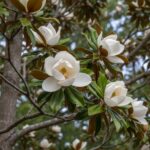
Southern magnolias prefer slightly acidic, moist, well-drained soils and perform best with afternoon shade in Central Florida’s intense summer heat. Their dense foliage and lower branches create excellent screening, and their evergreen nature provides year-round interest. The large, leathery leaves do create substantial litter, requiring consideration when placing these trees near pools or entertainment areas.
Excellent Non-Native Trees for Central Florida Landscapes
Crape Myrtle (Lagerstroemia indica)
Crape myrtles have earned their place as landscape favorites throughout Central Florida, offering spectacular summer blooms in colors ranging from white and pink to red and purple. These small to medium trees typically reach 15 to 25 feet in height depending on variety, with multi-trunk forms that showcase attractive exfoliating bark in shades of cinnamon, gray, and tan.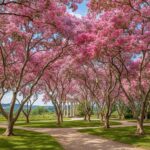
The long bloom period from June through September provides color during the hottest months when many other plants are stressed. Crape myrtles require full sun and well-drained soil, and they tolerate drought once established. Modern disease-resistant varieties have largely eliminated issues with powdery mildew that plagued older cultivars. These trees work well as focal points, in groupings, or lining streets and driveways.
Japanese Blueberry (Elaeocarpus decipiens)
The Japanese blueberry tree has gained popularity in Central Florida for its dense, evergreen foliage and neat growth habit. These trees typically reach 25 to 40 feet in height with upright, columnar forms that require little pruning. The new foliage emerges bronze-red before maturing to deep green, creating subtle color interest throughout the growing season.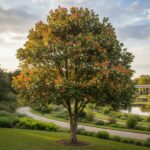
Small white flowers appear in spring followed by blue berries that attract birds. Japanese blueberries tolerate a range of soil conditions and adapt to both full sun and partial shade. Their formal appearance and moderate growth rate make them excellent choices for framing entries, creating living walls, or providing privacy screens without excessive maintenance requirements.
Tabebuia (Handroanthus species)
Tabebuias bring spectacular spring color to Central Florida landscapes with their masses of trumpet-shaped flowers in brilliant yellows, pinks, or purples. These deciduous trees typically bloom on bare branches in late winter or early spring before leaves emerge, creating dramatic displays. Most varieties grow 25 to 40 feet tall with rounded canopies.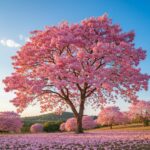
These trees prefer full sun and well-drained soils, showing good drought tolerance once established. The pink tabebuia (Handroanthus impetiginosus) and golden trumpet tree (Handroanthus chrysotrichus) are particularly popular choices. Their relatively small size and seasonal color make them excellent specimen trees for residential landscapes.
Bottlebrush (Callistemon species)
Bottlebrush trees and large shrubs add unique texture and vibrant color to Central Florida landscapes with their distinctive cylindrical flower spikes. These evergreen plants typically reach 15 to 25 feet in height depending on variety and pruning. The bright red flowers attract hummingbirds and butterflies, appearing most heavily in spring and fall with sporadic blooming throughout the year.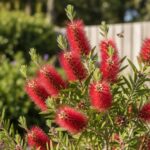
Bottlebrush plants tolerate poor soils, drought, and salt spray once established, making them low-maintenance landscape additions. They perform best in full sun and require minimal fertilization. These plants work well as specimens, informal hedges, or in mixed borders where their unique form provides contrast.
Mahogany (Swietenia mahagoni)
West Indies mahogany trees offer stately beauty and shade for larger Central Florida properties. These evergreen to semi-deciduous trees can reach 40 to 50 feet in height with dense, rounded canopies. The attractive compound leaves create fine texture, and the trees produce interesting woody seed capsules.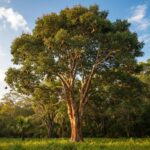
Mahogany trees prefer full sun and well-drained soils, showing good drought tolerance once established. They grow at moderate rates and develop strong branch structures resistant to wind damage. These trees work well as shade trees for larger properties, though they require adequate space to reach their full potential.
Fruit and Nut Trees Suitable for Central Florida
Citrus Trees (Citrus species)
Central Florida’s climate provides ideal conditions for growing various citrus species including oranges, grapefruits, tangerines, lemons, and limes. Most citrus trees remain relatively compact at 10 to 15 feet in height, making them suitable for residential landscapes. The fragrant white blossoms in spring fill the air with sweet perfume, while the colorful fruits provide both ornamental interest and delicious harvests.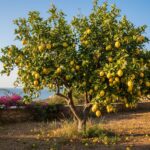
Citrus trees require full sun, well-drained soils, and regular fertilization with specialized citrus formulas. Protection from freezing temperatures may be necessary during occasional cold snaps. These trees work well in dedicated edible gardens, mixed borders, or container culture where they can be moved for cold protection.
Avocado (Persea americana)
Certain avocado varieties thrive in Central Florida’s climate, providing both landscape value and nutritious fruits. These evergreen trees typically reach 30 to 40 feet in height with dense canopies. Mexican and West Indian variety avocados show the best cold tolerance for the region.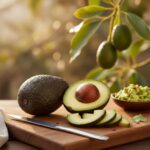
Avocado trees prefer full sun and well-drained soils, and they benefit from protection from strong winds. Their dense foliage provides excellent shade, and the trees can produce substantial fruit crops. Proper variety selection is crucial for success in Central Florida, as some avocado types are better suited to South Florida’s warmer climate.
Mango (Mangifera indica)
Mango trees bring tropical beauty and delicious fruit to Central Florida landscapes, though they require careful variety selection for adequate cold tolerance. These evergreen trees can grow 30 to 45 feet tall with dense, rounded canopies. The new foliage emerges wine-red before maturing to dark green.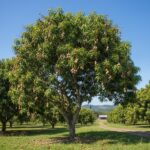
Varieties such as ‘Nam Doc Mai’, ‘Carrie’, and ‘Ice Cream’ show better cold tolerance for Central Florida conditions. These trees require full sun, well-drained soil, and protection from temperatures below 30 degrees Fahrenheit, which may necessitate cold protection measures every few years. Mango trees make excellent shade trees that also provide abundant fruit in late spring and summer.
Loquat (Eriobotrya japonica)
The loquat tree offers four-season interest with its large, evergreen leaves, fragrant fall flowers, and sweet golden fruits in spring. These small trees typically reach 15 to 25 feet in height with rounded canopies. The bold-textured foliage creates a tropical appearance, and the fuzzy white flower clusters provide nectar for bees during fall and winter months when few other plants bloom.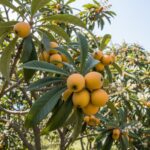
Loquats adapt to various soil types and tolerate some drought once established. They perform well in full sun to partial shade and require minimal maintenance. These trees work excellently as specimens, in mixed borders, or as edible landscape components.
Landscape Design Best Practices for Central Florida
Understanding Your Site Conditions
Successful landscape design begins with thorough site analysis. Central Florida properties vary considerably in soil types, drainage patterns, sun exposure, and microclimates. Sandy soils dominate much of the region, offering excellent drainage but limited water and nutrient retention. Some areas feature heavier clay or organic soils that hold moisture longer.
Assess your property’s sun exposure throughout the day and across seasons, as Florida’s sun intensity can stress plants not adapted to full exposure. Identify low areas where water collects and high, dry zones that drain quickly. Note existing trees, structures, and hardscaping that create shade or affect wind patterns. Understanding these conditions guides appropriate plant selection and placement for long-term success.
Creating Functional Outdoor Zones
Central Florida’s mild winters and hot summers encourage year-round outdoor living. Design landscapes with distinct functional zones that support various activities and needs. Entertainment areas benefit from partial shade provided by strategically placed trees, making spaces usable during summer afternoons. Create intimate spaces using smaller trees and shrubs to define outdoor rooms.
Consider how trees can provide shade for air conditioning units, reducing cooling costs by up to 10 percent. Position larger trees on the south and west sides of buildings to block intense afternoon sun while allowing winter sun penetration. Design circulation paths that lead visitors through interesting landscape experiences while providing practical access to all areas.
Implementing Proper Tree Spacing and Placement
One of the most common landscape mistakes involves planting trees too close to structures, utilities, or other plants. Research mature sizes for selected species and provide adequate space for development and often results in tree removal later down the road. Live oaks, for example, need 40 to 60 feet of space from buildings, while smaller trees like crape myrtles can be planted 10 to 15 feet from structures.
Consider underground utilities when placing trees, maintaining minimum distances of 10 feet from water and sewer lines and at least 15 feet from septic drain fields. Overhead power lines require special attention, with only small trees planted beneath or tall trees positioned well away from wires. Proper spacing prevents future pruning that require expensive corrections or tree removal.
Layering for Visual Interest and Functionality
Professional landscape designs incorporate vertical layering with canopy trees, understory trees, shrubs, and groundcovers creating diverse, naturalistic compositions. Canopy trees form the upper layer, providing shade and structure. Understory trees and large shrubs fill the middle layer, offering screening and habitat. Lower shrubs and groundcovers complete the composition while suppressing weeds.
This layered approach mimics natural ecosystems and creates landscapes that appear established and cohesive more quickly than single-layer designs. Layering also provides diverse habitats supporting native wildlife including birds, butterflies, and beneficial insects. Choose plants for each layer that share similar cultural requirements for water, sun, and soil, simplifying maintenance.
Incorporating Florida-Friendly Principles
The Florida-Friendly Landscaping program provides nine principles that guide sustainable landscape design throughout the state. These principles include right plant right place, water efficiently, fertilize appropriately, mulch, attract wildlife, manage yard pests responsibly, recycle yard waste, reduce stormwater runoff, and protect the waterfront.
Implementing these principles creates landscapes that conserve water, minimize fertilizer and pesticide use, and reduce the need for tree trimming. Group plants with similar water needs together in hydrozones, placing drought-tolerant plants in dry areas and moisture-loving species near natural water collection zones. Use native and well-adapted plants that thrive without excessive inputs.
Designing for Hurricane Resistance
Central Florida’s location makes hurricane preparedness essential in landscape design. Select trees with strong wood and flexible branching patterns that resist breakage. Species like live oak, sabal palm, bald cypress, and dahoon holly demonstrate excellent wind resistance. Avoid brittle species including Laurel oak, water oak, and queen palm in hurricane-prone areas.
Proper pruning maintains structural integrity by developing strong branch attachments and removing problematic limbs before storms arrive. Avoid topping or hurricane cuts that weaken trees and create excessive new growth with poor attachments. Create defensible spaces around homes by keeping large trees at least 20 feet from structures where possible.
Water Management and Irrigation Design
Central Florida receives approximately 50 inches of rainfall annually, with the majority falling during the June through September wet season. Design landscapes that capture and utilize this rainfall while managing runoff. Incorporate rain gardens, bioswales, and retention areas that filter and absorb stormwater rather than allowing it to carry pollutants to waterways.
Install efficient irrigation systems only where necessary, focusing on establishing new plantings rather than maintaining mature landscapes. Microirrigation systems deliver water directly to root zones with minimal waste. Zone irrigation systems to water plants with similar needs together, avoiding overwatering drought-tolerant species. Consider smart controllers that adjust watering based on weather conditions.
Soil Improvement and Mulching Strategies
Central Florida’s sandy soils benefit significantly from organic matter additions that improve water and nutrient retention. Incorporate compost, aged manure, or other organic materials when planting trees and preparing beds. These amendments create more hospitable root environments and reduce maintenance requirements.
Apply 2 to 3 inches of mulch around trees and throughout planting beds, maintaining a mulch-free zone of several inches around tree trunks to prevent rot. Mulch conserves soil moisture, moderates soil temperatures, suppresses weeds, and gradually improves soil as it decomposes. Replenish mulch annually or as needed to maintain proper depth.
Creating Wildlife-Friendly Landscapes
Native trees support complex food webs by providing nectar, pollen, fruits, seeds, and host plants for native insects that feed birds and other wildlife. Live oaks support over 500 species of butterflies and moths, while native palms provide fruits for numerous bird species. Incorporate diverse native plantings to maximize wildlife benefits.
Add water features like birdbaths or small ponds to provide drinking and bathing opportunities. Avoid pesticides that harm beneficial insects and the animals that feed on them. Leave some leaf litter and small dead branches as habitat for beneficial insects and small creatures. Create continuous corridors of vegetation that allow wildlife movement through the landscape.
Maintenance Planning and Sustainability
Design landscapes with realistic maintenance expectations matching available time and resources. Native and well-adapted plants require less intervention than poorly suited species struggling in inappropriate conditions. Group high-maintenance plants near the house where they receive attention while using tougher plants in outlying areas.
Plan for long-term tree care including periodic structural pruning, pest monitoring, and occasional fertilization. Establish mulch beds rather than turf around trees to protect roots from mower damage and reduce competition. If you already have old tree stumps on your property, stump grinding can provide you with mulch. Design irrigation, lighting, and other systems for easy access and maintenance. Consider future growth when planning hardscaping projects to avoid conflicts between expanding trees and structures.
Avoiding Common Central Florida Landscaping Mistakes
Improper Species Selection
Perhaps the most critical error in Central Florida landscaping involves choosing plants unsuited to the region’s climate and conditions. Cold-sensitive tropical species may thrive for years until a severe freeze causes devastating damage. Conversely, temperate species requiring winter chilling often languish in Florida’s mild climate.
Research hardiness requirements carefully, selecting species rated for zones 9a through 10a. Avoid plants that require acidic soil amendments to survive in alkaline conditions, as ongoing maintenance becomes burdensome. Choose species proven successful in Central Florida rather than experimenting with marginally adapted plants in prominent locations.
Planting Too Deeply
Planting trees too deeply remains one of the most common and damaging mistakes in landscape installation. The root flare where roots spread from the trunk should be visible at or slightly above the soil surface. Deep planting suffocates roots, causes root circling, and creates stress that manifests as decline years after installation.
When planting, locate the root flare and ensure it will sit at the proper level after settling. Dig wide, shallow holes rather than deep narrow ones, as tree roots spread laterally rather than growing deeply in Florida’s sandy soils. Remove container plants from pots and address circling roots before planting.
Over-Fertilizing and Over-Watering
Well-meaning homeowners often kill plants with kindness through excessive fertilization and irrigation. Central Florida’s sandy soils and frequent rainfall require different approaches than northern landscapes. Most established trees and native plants require little to no fertilization, with excessive nutrients running off into water bodies causing environmental damage.
Water newly planted trees regularly during establishment but reduce frequency as roots spread. Most established trees require supplemental irrigation only during extended dry periods. Overwatering causes root diseases and nutrient leaching while encouraging weak, excessive growth. Monitor soil moisture and water only when needed.
Neglecting Regular Maintenance
While Florida-Friendly landscapes require less maintenance than traditional designs, they still need regular attention for optimal appearance and health. Neglected trees develop structural problems that require expensive corrections later. Infrequent pruning leads to larger cuts that stress trees and create decay problems.
Establish regular maintenance routines including seasonal mulch renewal, irrigation system checks, pest monitoring, and structural pruning every three to five years for most trees. Address problems when small and manageable rather than waiting until major interventions become necessary.
Frequently Asked Questions About Central Florida Trees and Landscaping
What are the fastest-growing trees for Central Florida landscapes?
Several tree species grow quickly in Central Florida’s favorable climate. Slash pine can grow 3 to 4 feet annually under ideal conditions, providing quick screening and shade. Red maple grows 2 to 3 feet per year, offering fast shade and excellent fall color. Crape myrtles establish quickly and begin flowering within the first year after planting. River birch, tulip poplar, and bald cypress also grow relatively quickly. However, faster-growing trees often have shorter lifespans or weaker wood than slower-growing species like live oak. Balance the desire for quick results with long-term landscape goals, potentially incorporating both fast-growing temporary trees and slower-growing permanent specimens.
How far should trees be planted from houses and buildings?
Proper tree-to-building distances depend on the species’ mature size and root characteristics. As a general rule, plant large trees like live oak, magnolia, and mahogany at least 20 to 30 feet from structures, with distances of 40 feet or more ideal for very large specimens. Medium trees including crape myrtle and Japanese blueberry can be planted 10 to 15 feet from buildings. Small trees and palms can go closer at 6 to 10 feet depending on species. Consider mature canopy spread, as branches overhanging roofs create maintenance issues and potential damage during storms. Root systems can lift sidewalks and driveways, so provide adequate distance or install root barriers where space is limited.
What trees should be avoided in Central Florida landscapes?
Several trees commonly planted in Central Florida perform poorly or create problems. Laurel oak and water oak have weak wood that breaks easily in storms and relatively short lifespans of 50 to 70 years. These oaks also suffer from numerous disease and insect problems. Queen palms lack hurricane resistance and freeze easily, requiring frequent replacement. Leyland cypress develops fatal diseases in Florida’s humid climate and should be avoided. Chinese tallow tree is an invasive exotic that spreads aggressively into natural areas. Melaleuca and Australian pine are prohibited invasive species. Brazilian pepper spreads invasively and causes allergic reactions. Avoid these species in favor of more suitable alternatives with better performance and fewer problems.
How often should trees be watered in Central Florida?
Watering frequency depends on tree age, species, season, and site conditions. Newly planted trees require frequent watering during their first growing season, typically every 2 to 3 days for the first few weeks, then weekly as roots establish. Gradually reduce frequency as trees establish, usually requiring minimal supplemental water after the first year. During Central Florida’s dry season from October through May, even established trees may need monthly deep watering during extended dry periods. Native species adapted to Florida conditions require less supplemental irrigation than exotic species. Sandy soils drain quickly and require more frequent watering than heavier soils. Monitor soil moisture rather than following rigid schedules, watering deeply but infrequently to encourage deep rooting.
What is the best time to plant trees in Central Florida?
The optimal tree planting season in Central Florida runs from October through February during the cooler, drier months. Planting during this period allows trees to establish root systems before facing summer heat and stress. Fall planting is particularly advantageous as mild temperatures and occasional rainfall support establishment without excessive irrigation requirements. Trees planted in fall and winter have several months to develop roots before the onset of hot weather. Avoid planting during the summer rainy season when fungal diseases are most active and newly planted trees face maximum heat stress. Container-grown trees can technically be planted year-round with proper care, but cooler months still offer the best conditions for establishment and long-term success.
How do you protect trees from hurricane damage?
Hurricane preparation for trees combines proper species selection, correct planting practices, and regular maintenance. Choose wind-resistant species like live oak, sabal palm, bald cypress, and Southern red cedar. Plant trees at proper depths and distances from structures. Maintain trees through regular structural pruning that develops strong branch attachments and removes weak or damaged limbs. Prune every 3 to 5 years rather than waiting for problems to develop. Never top trees or make flush cuts that create decay. Avoid excessive pruning that removes too much canopy and stimulates weak new growth. Remove dead, diseased, or damaged branches promptly. Thin dense canopies slightly to reduce wind resistance while maintaining trees’ natural form. After storms, assess damage carefully and hire certified arborists for major tree work.
What soil amendments are necessary for planting trees in Central Florida?
Central Florida’s sandy soils benefit from organic matter additions but typically require no other amendments for most tree species. When planting, incorporate compost, composted manure, or peat moss into the backfill at a rate of about 25 percent by volume. These amendments improve water and nutrient retention without dramatically changing soil characteristics. Avoid excessive amendments that create interfaces between improved planting holes and surrounding native soil, as roots may circle rather than spreading outward. Most trees adapted to Central Florida thrive in native sandy soils once established. Some species preferring acidic conditions may benefit from sulfur additions in areas with alkaline water and soils, but choose species naturally suited to local conditions rather than fighting soil chemistry through constant amendments.
How much does it cost to have trees professionally planted in Central Florida?
Professional tree installation costs vary widely based on tree size, species, quantity, and site accessibility. Small trees in 7 to 15-gallon containers typically cost $200 to $500 installed, including the tree, planting, and initial mulching. Medium trees in 25 to 45-gallon containers range from $500 to $1,500 installed. Large specimen trees in 65 to 100-gallon containers or larger can cost $1,500 to $5,000 or more depending on species and size. Palm trees are priced differently, with 12 to 15-foot specimens costing $1,000 to $3,000 installed. Additional costs include site preparation, irrigation installation, soil amendments, and extended maintenance contracts. Prices reflect materials, labor, equipment, and expertise. While DIY installation saves money, professional installation ensures proper techniques and often includes warranties.
What trees provide the best shade in Central Florida?
Several tree species excel at providing dense shade in Central Florida landscapes. Live oak is unmatched for creating broad, dense shade with its massive evergreen canopy spreading up to 100 feet at maturity. Southern magnolia provides dense shade year-round with its thick, glossy evergreen foliage, though it requires more space vertically than horizontally. Laurel oak grows quickly and creates thick shade but has weaker wood and shorter lifespan than live oak. Mahogany develops dense, rounded canopies providing excellent shade for large properties. Red maple offers good shade with the bonus of fall color. For smaller spaces, camphor tree provides dense shade on a more compact scale, though it can be somewhat invasive. Japanese blueberry works well for smaller yards, creating filtered shade with its dense evergreen foliage and columnar form.
Can you grow oak trees from acorns in Central Florida?
Oak trees can definitely be grown from acorns in Central Florida, though the process requires patience and proper techniques. Collect fresh acorns in fall when they naturally drop, selecting plump, unblemished specimens without holes indicating insect damage. Live oak acorns germinate immediately upon falling and should not be allowed to dry out. Plant fresh live oak acorns 1 to 2 inches deep in containers or directly in the ground where you want trees to grow. Keep soil consistently moist but not waterlogged. Germination typically occurs within 2 to 4 weeks. Other oak species may require cold stratification before germinating. Seedling oaks develop taproots quickly and benefit from deep containers if grown in pots before transplanting. Growing from acorns provides free trees but requires 5 to 10 years before trees provide significant landscape presence.
How do you prevent oak wilt and other tree diseases in Central Florida?
Oak wilt is relatively uncommon in Central Florida compared to Texas and the Midwest, but proper tree health practices prevent many disease problems. Prune oak trees during their dormant period from December through February to minimize attraction of beetles that spread oak wilt. Make clean cuts and avoid leaving stubs. Sterilize pruning tools between trees using alcohol or bleach solution. Maintain tree health through proper watering during dry periods, avoiding both drought stress and overwatering. Mulch around trees to conserve moisture and protect roots. Avoid fertilization near mature oaks, as excessive nitrogen encourages disease problems. Watch for symptoms including leaf discoloration, wilting, and unusual leaf drop. Consult certified arborists if diseases are suspected. Plant diverse species rather than monocultures to prevent diseases from spreading rapidly through the landscape.
What trees attract butterflies and wildlife in Central Florida?
Native trees provide the best wildlife value in Central Florida landscapes. Live oak supports over 500 species of butterflies and moths through its role as a host plant, and the resulting caterpillars feed birds and other wildlife. Native azaleas serve as nectar sources for butterflies and support butterfly larvae. Wild cherry species host multiple butterfly species while providing fruits for birds. Hercules club provides nectar and hosts giant swallowtail butterflies. Willow species host viceroy butterflies and numerous moths. Among non-native species, citrus trees attract butterflies with their fragrant flowers and serve as host plants for giant swallowtails. Bottlebrush trees attract hummingbirds with their vibrant flowers. Fruit trees including mulberry, beautyberry, and elderberry draw birds seeking nutritious fruits. Creating diverse plantings with multiple flowering periods provides resources throughout the year.
How close can trees be planted to septic systems in Central Florida?
Trees should be planted well away from septic systems to prevent root intrusion into pipes and drain fields. Maintain minimum distances of 25 to 30 feet between large trees and septic drain fields, with 50 feet or more ideal for trees with aggressive root systems like willows, poplars, and bamboo. Plant only small trees or large shrubs 10 to 15 feet from drain fields. Keep all trees at least 10 to 15 feet from septic tanks and pipes. Trees planted too close seek moisture and nutrients in septic systems, with roots clogging pipes and penetrating tanks. Repair costs for root-damaged septic systems are substantial, often exceeding $5,000. Select appropriate trees for locations near septic systems, favoring palms and smaller species over large water-seeking trees. Consult septic system design plans before planting to identify all components requiring clearance.
What permits are required for tree planting in Central Florida?
Generally, no permits are required for planting trees on private property in Central Florida, unlike tree removal which often requires permits. However, several situations require awareness of regulations. Homeowners associations may have landscape restrictions including approved tree lists, size limitations, and placement requirements. Review HOA covenants before planting. Properties within historic districts may have landscape guidelines requiring approval. Waterfront properties face special regulations protecting shorelines, with setback requirements for plantings near water bodies. Protected trees on your property may have buffer zones affecting where new trees can be planted. Commercial properties and subdivisions face different requirements than single-family homes. Trees planted in road rights-of-way require county or city approval. Contact your local county extension office or planning department for specific requirements in your area before undertaking major landscape installations.
How do you choose between palm trees and shade trees for Central Florida?
The choice between palms and shade trees depends on landscape goals, space availability, and aesthetic preferences. Palms provide strong tropical character and vertical accent without creating dense shade. They require minimal maintenance, withstand hurricanes well, and cast light filtered shade that allows grass and understory plants to thrive beneath them. Palms work well in narrow spaces, near pools, and where overhead clearance is needed. However, palms don’t significantly reduce temperatures or energy costs through shade. Shade trees create cooler outdoor spaces, reduce home cooling costs, provide privacy, and support more diverse wildlife. They require more maintenance including periodic pruning and leaf cleanup. Large shade trees need substantial space but provide proportional benefits. Many successful landscapes incorporate both palms and shade trees, using palms for accents and shade trees for functional cooling and wildlife habitat.
What spacing is recommended when planting trees along property lines?
Tree spacing along property lines requires careful consideration of mature sizes, neighbor relations, and local ordinances. Many municipalities require trees to be planted at least 3 to 5 feet from property lines, though requirements vary by community. Beyond legal requirements, practical considerations suggest planting trees at least half their mature spread from property lines. For live oaks with 80-foot spreads, this means 40 feet from boundaries. Smaller trees like crape myrtles with 20-foot spreads should be planted at least 10 feet from lines. Consider neighbor perspectives, as overhanging branches and roots crossing property lines create potential conflicts. Root barriers can be installed between trees and boundaries where space is limited. Discuss landscape plans with neighbors before planting large trees near shared property lines. Choose columnar or narrow tree forms for tight spaces along boundaries.
How long does it take for newly planted trees to establish in Central Florida?
Tree establishment time varies by species, planting size, and care quality, but general guidelines exist for Central Florida conditions. As a rule, trees require approximately one year of establishment for every inch of trunk diameter. A tree with a 2-inch diameter trunk needs two years to fully establish, while a 4-inch tree needs four years. During establishment, trees develop root systems in the surrounding soil and adapt to site conditions. Container-grown trees establish faster than field-grown specimens since their roots are less disturbed during planting. Fast-growing species like red maple and pine establish more quickly than slow-growing oaks. Proper care including consistent watering, mulching, and weed control accelerates establishment. Trees receiving poor care may take twice as long to establish or fail entirely. Established trees demonstrate vigorous growth, require minimal supplemental irrigation, and show no transplant stress symptoms.
What trees are best for small Central Florida yards?
Small yards benefit from carefully selected trees that provide interest without overwhelming limited space. Crape myrtles offer seasonal color, attractive bark, and compact sizes perfect for small spaces, with many varieties staying under 15 feet tall. Japanese blueberry can be maintained at 20 to 25 feet and provides dense evergreen screening. Bottlebrush works well as a small accent tree with colorful flowers. Loquat provides edible fruit and bold tropical texture on a compact 15 to 20-foot frame. Thatch palms remain under 20 feet and create tropical ambiance without excessive size. Dwarf citrus varieties including kumquat and Meyer lemon thrive in small yards or large containers. Redbud and dogwood provide spring flowers on small frames. Walter’s viburnum functions as either large shrub or small tree with fragrant flowers and bird-attracting berries. Focus on multi-season interest and vertical rather than horizontal spread for small spaces.
Are there trees that stay green year-round in Central Florida?
Many trees maintain their foliage throughout the year in Central Florida’s subtropical climate. Live oak remains evergreen with dark green leaves year-round, though it does drop some leaves in spring as new growth emerges. Southern magnolia keeps its glossy leaves throughout the year. Japanese blueberry provides dense evergreen screening in all seasons. All palm species including sabal palm, queen palm, and pygmy date palm retain their fronds year-round. Dahoon holly, slash pine, and East Palatka holly stay green constantly. Loquat maintains large evergreen leaves that create tropical effects year-round. Sweet bay magnolia keeps most of its foliage through winter. Wax myrtle provides evergreen foliage on a large shrub or small tree form. These evergreen species create consistent backdrops and provide year-round privacy, shade, and structure in Central Florida landscapes.
What is the best tree for privacy screening in Central Florida?
Several trees excel at creating privacy screens in Central Florida landscapes. Japanese blueberry tops the list with its dense, upright growth habit, evergreen foliage, and ability to be planted relatively close together. These trees create living walls 25 to 30 feet tall and can be maintained at narrower widths through light pruning. East Palatka holly grows into a pyramidal evergreen tree reaching 30 to 40 feet with dense branching perfect for screening. Podocarpus, while technically a large shrub, can be grown as a tree and provides excellent evergreen screening up to 25 feet tall. Wax myrtle grows quickly into a multi-trunked evergreen screen 15 to 25 feet tall. For larger properties, live oak creates massive screening once mature, though it requires decades to reach full size. Clumping bamboos, particularly ‘Alphonse Karr’ bamboo, create quick evergreen screens though they require more maintenance to prevent spreading.
How do you care for newly planted trees in Central Florida summers?
Newly planted trees face significant stress during Central Florida’s hot, humid summers and require attentive care for survival. Water new trees every 2 to 3 days for the first two weeks, applying water slowly to ensure deep penetration. Gradually reduce frequency to once or twice weekly, but increase quantity to encourage deep rooting. Apply 3 to 4 inches of mulch around trees, keeping mulch several inches from trunks. Mulch conserves moisture, moderates soil temperatures, and suppresses competing weeds. Monitor for signs of water stress including wilting, leaf browning, or premature leaf drop. Avoid fertilizing newly planted trees during their first growing season, as fertilizer encourages top growth at the expense of root development. Protect trunks from sun scald by leaving lower branches temporarily or using tree wrap on the south and west sides. Stake only if necessary for stability, removing stakes after one growing season. Check trees weekly during hot weather.
What trees are drought-tolerant once established in Central Florida?
Many trees demonstrate excellent drought tolerance once their root systems establish in Central Florida landscapes. Live oak is supremely drought-tolerant, surviving extended dry periods without supplemental irrigation. Slash pine and other native pines thrive in dry sandy soils with minimal water. Sabal palm and other native palms tolerate drought conditions exceptionally well. Crape myrtle survives dry periods once established, though flowering may be reduced without adequate moisture. Bottlebrush adapts to dry conditions after establishment. Bald cypress, despite its association with wetlands, tolerates drought remarkably well in upland plantings. Sweet acacia and other acacias thrive in dry conditions. Jerusalem thorn provides filtered shade and requires minimal water. Texas wild olive demonstrates good drought tolerance. Even drought-tolerant trees benefit from occasional deep watering during extended dry periods exceeding four weeks without rain. Drought tolerance develops gradually as root systems expand beyond the original planting area.
Can you grow fruit trees in containers in Central Florida?
Container culture works well for many fruit trees in Central Florida, particularly dwarf and semi-dwarf varieties. Citrus trees are especially well-suited to containers, with varieties like Meyer lemon, kumquat, and calamondin thriving in pots. Use containers at least 20 to 25 gallons in size with excellent drainage. Dwarf avocado varieties including ‘Wurtz’ grow successfully in large containers. Fig trees adapt well to container culture and can be moved for cold protection. Dwarf peach and nectarine varieties bred for Florida can be container-grown. Small tropical fruits like Barbados cherry, miracle fruit, and carambola work in containers. Use quality potting mixes designed for containers rather than garden soil. Container trees require more frequent watering than ground-planted specimens, potentially daily during hot weather. Fertilize container trees regularly with diluted liquid fertilizer or slow-release products. Root prune and repot trees every 2 to 3 years to maintain health.
What trees provide fall color in Central Florida?
While Central Florida’s fall color display is subtle compared to northern regions, several trees provide seasonal interest. Red maple leads the list with reliable fall color ranging from yellow to orange and red, particularly after cool nights. Bald cypress needles turn rusty orange-brown before dropping in late fall, creating beautiful seasonal displays. Sweet gum develops purple, red, and yellow fall foliage, though performance varies by individual tree. River birch leaves turn yellow in fall before dropping. Chinese pistache provides reliable orange and red fall color even in Central Florida’s mild climate. Red mulberry leaves turn yellow in fall. Black gum or tupelo develops red to purple fall foliage in cooler years. Winged elm leaves turn yellow to red in fall. Crape myrtle foliage often turns red, orange, or burgundy before dropping. Fall color in Central Florida depends on nighttime temperatures and moisture conditions, with better displays following cooler, drier autumns.
How do you select trees for Central Florida coastal properties?
Coastal Central Florida properties face unique challenges including salt spray, sandy soils, strong winds, and occasional flooding. Salt-tolerant species are essential for properties within a mile of the coast. Sabal palm demonstrates exceptional salt tolerance and wind resistance. Live oak tolerates salt spray once established and provides wind-resistant structure. Sea grape, while technically a large shrub, functions as a small tree and thrives in coastal conditions. Southern red cedar tolerates salt spray and strong winds. Dahoon holly adapts to coastal conditions with moderate salt tolerance. Geiger tree provides colorful flowers and good salt tolerance for South Central Florida coastal areas. Simpson stopper works as a small tree with excellent salt tolerance. Buttonwood tolerates salt and wet soils common in coastal areas. Avoid thin-barked species sensitive to salt spray and choose trees with flexible branches that bend in wind rather than breaking. Protect trees from direct salt spray using fences or salt-tolerant shrubs as windbreaks.
What are the most common tree pests in Central Florida?
Central Florida trees face numerous pest challenges in the region’s warm, humid climate. Aphids attack many tree species, causing leaf distortion and honeydew production that encourages sooty mold. Scale insects including magnolia scale, tea scale, and various armored scales infest numerous trees, weakening plants by sucking sap. Spider mites cause stippling and bronzing on stressed trees, particularly during dry weather. Whiteflies infest many species, especially ficus and citrus. Bagworms occasionally attack pine and cypress trees. Citrus greening disease transmitted by Asian citrus psyllids has devastated citrus production. Oak decline and wilt affect stressed oak trees. Palm weevils damage palms, particularly Canary Island date palms. Ganoderma root rot affects palms and some hardwoods. Many pest problems result from environmental stress rather than the pests themselves. Maintain tree health through proper watering, mulching, and care. Monitor regularly and address pest problems when populations are low and manageable.
How deep should mulch be around trees in Central Florida?
Proper mulching depth and application significantly impact tree health in Central Florida landscapes. Apply 2 to 3 inches of mulch in a ring extending from several inches away from the trunk to at least the tree’s drip line if possible. Never pile mulch against tree trunks, as this “mulch volcano” creates moisture that encourages root and trunk rot, insect problems, and rodent damage. The mulch-free zone around trunks should be 6 to 12 inches in diameter depending on tree size. Mulch layers deeper than 4 inches create anaerobic conditions that harm roots and encourage shallow rooting. Too little mulch provides inadequate benefits. Replenish mulch annually or as needed to maintain 2 to 3-inch depth, as it decomposes over time. Use natural mulches like wood chips, pine bark, eucalyptus mulch, or pine straw. Avoid dyed mulches, rubber mulch, and inorganic materials. Proper mulching conserves moisture, moderates soil temperature, suppresses weeds, and gradually improves soil.
What trees attract hummingbirds in Central Florida?
Several trees reliably attract hummingbirds to Central Florida landscapes with their tubular flowers and nectar production. Bottlebrush trees top the list with vibrant red flower spikes that hummingbirds adore, blooming heavily in spring and fall with sporadic flowering year-round. Coral bean or Cherokee bean produces spikes of red tubular flowers in spring that hummingbirds visit frequently. Silk floss tree offers pink flowers attractive to hummingbirds. Red buckeye blooms in late winter and early spring with red tubular flowers. Flowering maple or abutilon, grown as a large shrub or small tree, provides bell-shaped flowers in various colors including red and orange that attract hummingbirds. Cape honeysuckle grows as a large shrub or small tree with orange tubular flowers. Coral honeysuckle vine can be trained into tree form and offers tubular flowers. Citrus trees attract hummingbirds with their fragrant spring blooms. Plant multiple species for extended blooming periods that provide nectar throughout the year.
How do you transplant mature trees in Central Florida?
Transplanting mature trees requires careful planning, proper technique, and often professional expertise. The best time for transplanting in Central Florida is during the dormant season from November through February when trees face less stress. Trees with trunk diameters under 4 inches have the best transplant success rates. Root prune trees 6 to 12 months before transplanting by cutting a circle around the tree at a distance of 10 to 12 inches per inch of trunk diameter. This encourages compact root development that survives the move. Dig the new planting hole before removing the tree. Carefully excavate trees to preserve as much root system as possible, maintaining a root ball at least 10 to 12 inches in diameter per inch of trunk diameter. Use burlap and rope or wire baskets to support large root balls during transport. Plant at proper depth with the root flare visible. Water thoroughly and maintain consistent moisture throughout the first growing season. Expect transplant shock symptoms and provide excellent care for at least two years.
What trees are best for blocking traffic noise in Central Florida?
Trees can effectively reduce traffic noise when planted in sufficient numbers and densities. Dense evergreen trees work best for sound absorption and deflection. Plant trees in staggered rows rather than single lines for maximum effect. Japanese blueberry creates dense evergreen walls that block both noise and view. East Palatka holly provides thick evergreen screening. Live oak’s dense canopy absorbs and deflects sound once mature. Southern red cedar offers evergreen dense foliage. Podocarpus creates thick evergreen barriers. Combine trees with shrubs in layered plantings for maximum sound reduction, as mixed plantings with varied heights and densities perform better than single-species screens. Earth berms combined with plantings provide even better noise reduction. Trees reduce noise most effectively when planted close to the source or close to the area being protected rather than halfway between. Plan for adequate space, as effective noise-reduction plantings require 50 to 100 feet of depth for significant sound reduction.
How often should established trees be pruned in Central Florida?
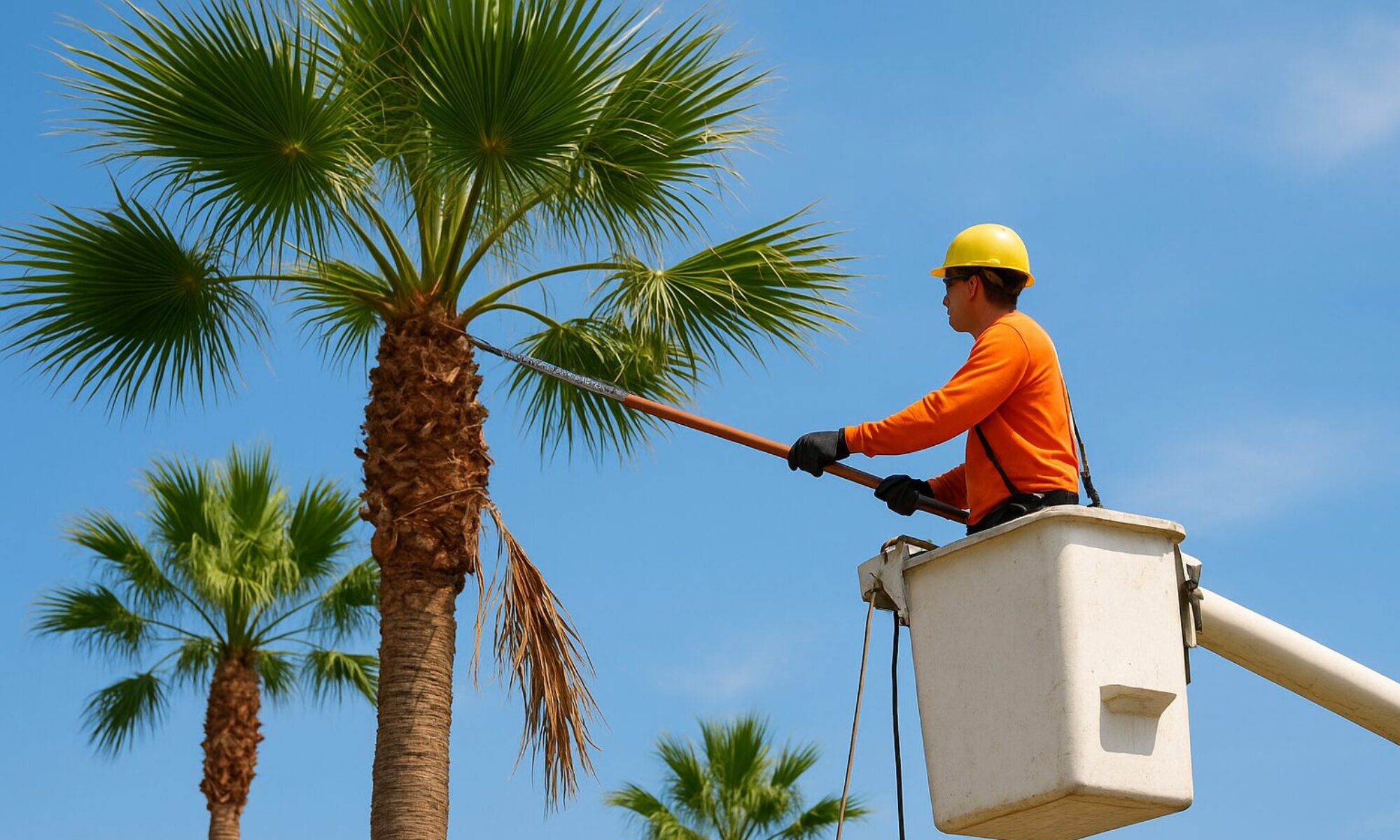
Established tree pruning frequency depends on species, growth rate, and landscape setting. Most mature landscape trees benefit from structural pruning every 3 to 5 years to remove dead, diseased, or damaged wood and correct developing problems. Fast-growing trees like crape myrtle may require annual pruning to maintain desired size and form. Palm trees need pruning annually to remove dead fronds, though only brown fronds should be removed. Young trees require more frequent pruning to develop proper structure, typically annually for the first 5 years. Mature trees in low-traffic areas may need pruning only every 5 to 7 years. Never remove more than 25 percent of a tree’s canopy in a single pruning session. Avoid unnecessary pruning, as each cut creates a wound requiring energy to seal. Prune during appropriate seasons, typically during dormancy from December through February for most species. Hire certified arborists for large trees or complex pruning needs. Regular inspection catches problems early when corrections require minimal intervention.
What trees are recommended for wildlife gardens in Central Florida?
Wildlife-friendly gardens incorporate trees that provide food, shelter, and nesting opportunities for diverse species. Live oak supports immense wildlife populations by hosting hundreds of insect species that feed birds and providing acorns for mammals. Southern red cedar produces berries that feed over 50 bird species. Wild cherry species host butterfly larvae and produce fruits for birds. Elderberry produces berries attractive to numerous bird species. Beautyberry’s bright purple berries feed birds in fall and winter. Dahoon holly provides persistent berries throughout winter. Red mulberry fruits feed dozens of bird species. Persimmon fruits attract birds and mammals. Wax myrtle produces berries favored by yellow-rumped warblers and other species. Sabal palm fruits feed numerous bird species. Black gum provides fall and winter fruits. Slash pine seeds feed birds and squirrels. Create diverse plantings with various fruiting and flowering times to provide year-round resources. Include water features and leave some brush piles for additional wildlife habitat.
Conclusion: Creating Sustainable, Beautiful Central Florida Landscapes
Designing successful landscapes in Central Florida requires understanding the region’s unique environmental conditions and selecting appropriate tree species that thrive with minimal intervention. The combination of native and well-adapted trees creates landscapes that support local ecosystems, conserve water, resist hurricanes, and provide beauty throughout the year.
By following Florida-Friendly Landscaping principles and implementing thoughtful design practices, homeowners and landscape professionals create outdoor spaces that enhance property values while protecting environmental resources. Proper tree selection, placement, and care ensure landscapes mature into cohesive, sustainable compositions that serve generations.
Central Florida’s favorable growing conditions allow diverse tree species to flourish, offering options for every landscape need from shade and privacy to wildlife habitat and seasonal color. Whether creating new landscapes or enhancing existing ones, informed tree selection and proper design practices result in outdoor spaces that are both beautiful and functional.
Investing time in proper planning, selecting quality trees, and providing appropriate care during establishment pays dividends through decades of enjoyment and minimal maintenance. Central Florida landscapes designed with these principles become increasingly valuable and beautiful as trees mature, providing shade, habitat, and character that define memorable outdoor spaces.