Key Takeaways & Insights
- Orlando-Specific Challenges: Hurricane season (June-November) creates unique tree removal demands with saturated soils and high winds compromising even healthy trees
- Permit Requirements: Most Orlando municipalities require permits for protected species and trees above specific size thresholds, with fines for non-compliance
- Cost Range: Professional removal costs $200-$2,500+ depending on tree height, with small trees (under 30 ft) at $200-$500, medium (30-60 ft) at $500-$1,200, and large (60+ ft) at $1,200-$2,500+
- Optimal Timing: October through April provides best conditions for non-emergency removal, avoiding hurricane season and peak heat
- Essential Equipment: Professional operations require 8+ specialized tool categories including crane systems for confined spaces and trees near structures
- Safety Priority: DIY removal only recommended for trees under 10-15 feet; professional services reduce injury risk by 95% compared to amateur attempts
- Protected Species: Live oaks, laurel oaks, and sand live oaks require special permits even on private property in most Orlando jurisdictions
- Stump Grinding Value: Professional stump grinding prevents termite attraction and allows immediate replanting or lawn restoration
- Emergency Response: Post-hurricane removal demand surges create 2-4 week delays; pre-season arborist inspections reduce emergency needs by identifying risks early
- Sustainability Practices: Modern Orlando services recycle 80-90% of removed trees into mulch, firewood, or lumber rather than landfill disposal
- Insurance Requirements: Legitimate services carry both general liability and workers’ compensation; uninsured operators transfer all liability to property owners
- Foundation Risk: Trees planted within 20 feet of structures in Orlando’s high water table conditions pose increased root intrusion risks to foundations and plumbing
Orlando, Florida, known for its lush landscapes and abundant tree coverage, presents unique challenges and considerations when it comes to tree removal. With the region’s subtropical climate, diverse tree species, and frequent severe weather events including hurricanes and tropical storms, understanding proper tree removal practices is essential for property owners throughout Central Florida.
Understanding Tree Removal in Orlando’s Unique Climate
The Orlando metropolitan area features a distinctive ecosystem that supports numerous tree species, from majestic live oaks draped with Spanish moss to towering pine trees and tropical palms. However, this same environment that promotes vigorous growth also creates situations where tree removal becomes necessary. Storm damage, disease, structural instability, and development requirements all contribute to the need for professional tree removal services in the region.
Florida’s hurricane season, running from June through November, poses significant risks to trees throughout Orlando. High winds, heavy rainfall, and saturated soils can compromise even the healthiest trees, making proactive assessment and timely removal critical for protecting property and ensuring public safety. Additionally, the state’s rapid urban development often necessitates tree removal to accommodate construction projects, though local ordinances typically require permits and sometimes mandate replacement plantings.
When Tree Removal Becomes Necessary
Storm Damage and Structural Compromise
Hurricane damage represents one of the most common reasons for tree removal in Orlando. Trees that have been uprooted, split, or severely damaged during storms often cannot be salvaged and pose immediate dangers to structures, power lines, and people. Even trees that appear to have survived a storm may have sustained root damage or internal structural compromise that makes them hazardous.
Disease and Pest Infestation
Central Florida’s warm, humid climate creates ideal conditions for various tree diseases and pests. Conditions such as oak wilt, root rot, and infestations by beetles or borers can necessitate tree removal to prevent spread to healthy specimens. Diseased trees often become structurally unsound, increasing the risk of unexpected failure.
Development and Property Management
New construction, property improvements, and landscape redesigns frequently require tree removal. However, Orlando and surrounding municipalities have strict tree protection ordinances that regulate which trees can be removed and under what circumstances. Property owners must typically obtain permits before removing certain protected species or trees above specific size thresholds.
Essential Equipment for Professional Tree Removal
Chainsaws and Cutting Tools
Professional-grade chainsaws form the backbone of any tree removal operation. Arborists typically utilize multiple chainsaws of varying sizes, from compact models for precision work to powerful units capable of cutting through massive trunks. Modern chainsaws used in professional tree removal feature advanced safety mechanisms, anti-vibration systems, and efficient cutting chains designed for different wood types and cutting conditions.
Pole Saws and Pruning Equipment
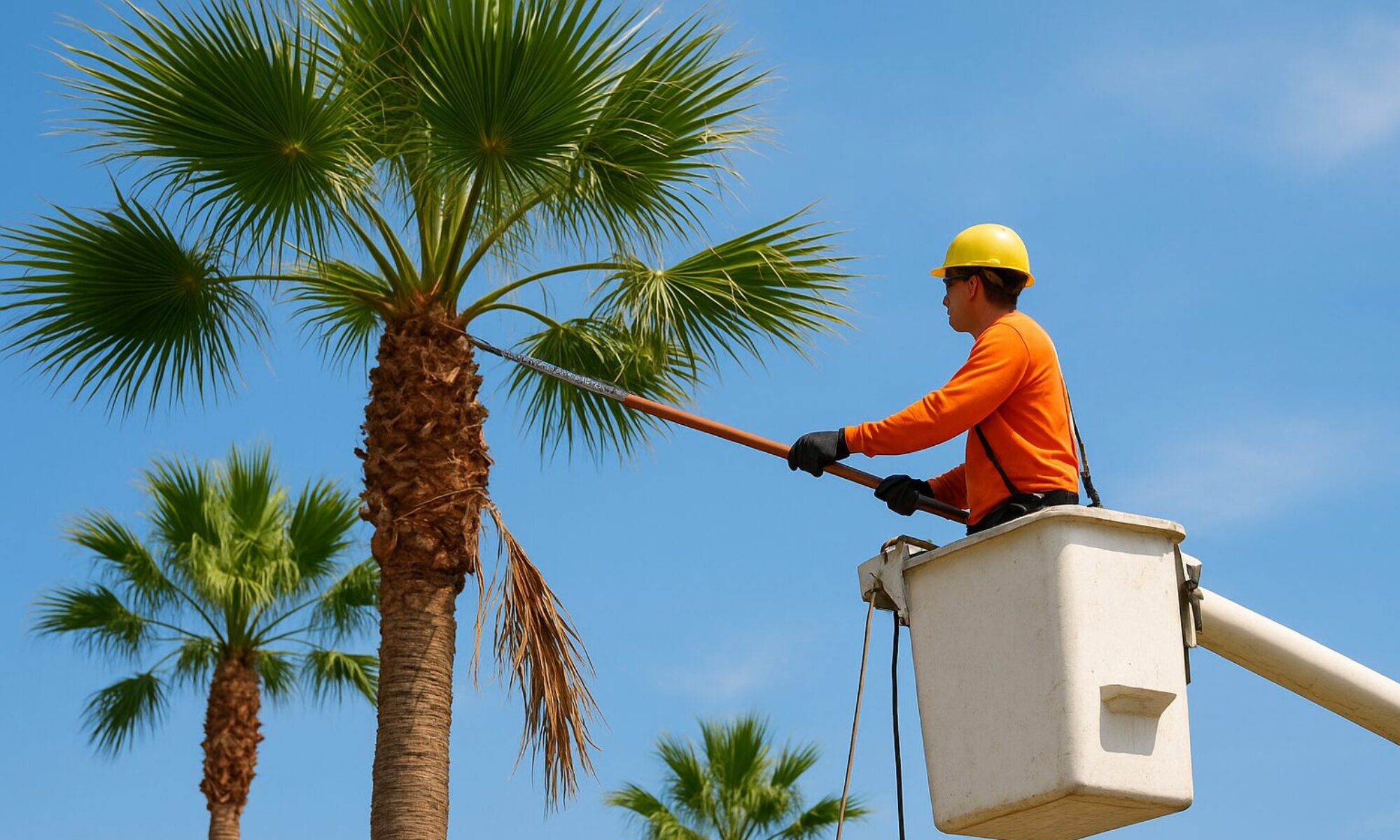
For accessing higher branches and conducting preliminary trimming, pole saws extend an arborist’s reach significantly. These tools, available in both manual and powered versions, allow workers to remove smaller branches and reduce a tree’s canopy before tackling the main trunk.
Climbing Equipment and Aerial Access
Tree removal in Orlando often requires arborists to work at considerable heights. Professional climbing gear includes specialized harnesses, ropes rated for arborist work, carabiners, and friction devices that allow controlled ascent and descent. Experienced climbers use these tools to position themselves strategically throughout a tree, systematically removing sections from the top down.
Bucket Trucks and Aerial Lifts
When ground conditions and site access permit, bucket trucks provide safer and more efficient alternatives to climbing. These specialized vehicles feature hydraulic booms that can extend 40 to 100 feet or more, allowing operators to reach high branches while maintaining a stable working platform. Aerial lifts prove particularly valuable for removing trees near structures or power lines where precision is paramount.
Cranes for Large-Scale Removal
Exceptionally large trees, those in confined spaces, or specimens positioned dangerously close to structures often require crane-assisted removal. Cranes allow arborists to lift massive sections of trunk and branches straight up and away from sensitive areas, minimizing the risk of collateral damage. This equipment is particularly common in Orlando’s established neighborhoods where mature trees grow in close proximity to homes and infrastructure.
Stump Grinders
After a tree is removed, the remaining stump presents both aesthetic and practical concerns. Professional stump grinders utilize rotating cutting wheels studded with carbide teeth to pulverize stumps below ground level. These machines range from compact units suitable for residential properties to large, self-propelled models capable of removing massive stumps efficiently.
Wood Chippers
Managing the substantial debris generated during tree removal requires industrial wood chippers. These machines process branches and smaller wood sections into mulch or chips, dramatically reducing the volume of material that must be transported from the site. Modern chippers feature safety mechanisms and can handle material ranging from small twigs to branches several inches in diameter.
Support Equipment
Rigging and Lowering Devices
Controlled lowering of heavy tree sections requires specialized rigging equipment including pulleys, block and tackle systems, and friction devices. These tools allow ground crew members to manage the descent of large branches and trunk sections safely, preventing uncontrolled falls that could cause property damage or injury.
Safety Gear
Professional tree removal operations prioritize worker safety through comprehensive protective equipment. Hard hats, safety glasses, hearing protection, cut-resistant clothing, and steel-toed boots represent standard requirements. Arborists working at height also utilize fall protection systems that exceed OSHA standards for construction and tree care industries.
The Tree Removal Process in Orlando
Initial Assessment and Planning
Professional tree removal begins with a thorough assessment of the tree’s condition, location, and surrounding environment. Certified arborists evaluate factors including the tree’s health, structural integrity, lean, proximity to structures and utilities, and potential hazards. This assessment informs the removal strategy and determines which equipment and techniques will be employed.
Obtaining Necessary Permits
Orlando’s tree protection ordinances require permits for removing or even trimming certain trees. Property owners must typically apply through their local municipality, providing justification for removal and sometimes agreeing to plant replacement trees. The permit process helps protect Orlando’s urban forest while allowing necessary tree removal under appropriate circumstances.
Site Preparation and Safety Protocols
Before beginning removal operations, professional crews establish work zones, identify hazards, and implement safety protocols. This includes notifying nearby residents, coordinating with utility companies if necessary, and ensuring adequate space for equipment operation and debris management.
Systematic Removal Techniques
Most tree removals proceed from the top down, with arborists removing the canopy in manageable sections before addressing the trunk. This methodical approach maintains control throughout the process and minimizes risks to surrounding property. In situations where space permits, felling the entire tree in one piece may be appropriate, though this technique is less common in developed residential areas.
Cost Considerations for Orlando Tree Removal
Tree removal costs in the Orlando area vary significantly based on numerous factors. Tree size represents the primary cost driver, with small trees under 30 feet costing substantially less than large specimens exceeding 60 feet. Location and accessibility also impact pricing, as trees near structures, power lines, or in confined spaces require more time, specialized equipment, and careful execution.
Additional factors affecting cost include the tree’s condition (dead or diseased trees may be more dangerous to remove), species (some wood is harder and more difficult to cut), and whether stump grinding is included. Emergency tree removal following storm damage typically commands premium pricing due to the urgent nature and potential hazards involved.
Choosing a Qualified Tree Removal Service
Selecting a reputable tree removal company in Orlando requires careful consideration. Property owners should verify that companies carry appropriate insurance, including general liability and workers’ compensation coverage. Certification from organizations such as the International Society of Arboriculture (ISA) indicates professional training and adherence to industry standards.
Requesting multiple quotes allows comparison of services and pricing, though the lowest bid may not represent the best value. Reputable companies provide detailed written estimates, explain their approach, and willingly answer questions about their experience, equipment, and safety protocols.
Environmental and Community Considerations
Orlando’s urban forest provides numerous benefits including shade, stormwater management, air quality improvement, and wildlife habitat. Responsible tree removal acknowledges these contributions and considers the broader environmental impact. Many property owners choose to plant replacement trees, often selecting species better suited to their location or more resistant to storm damage.
Professional tree removal companies increasingly focus on sustainability, recycling wood into mulch, firewood, or lumber when possible rather than sending all material to landfills. This approach aligns with Orlando’s environmental goals and reduces the ecological footprint of tree removal operations.
Frequently Asked Questions About Tree Removal in Orlando
Do I need a permit to remove a tree on my property in Orlando?
Yes, in most cases. The City of Orlando requires permits for removing trees that meet certain size thresholds or are designated as protected species. Requirements vary by municipality, so property owners in surrounding areas like Winter Park, Kissimmee, or unincorporated Orange County should check with their local government. Permits typically involve an application fee and may require justification for removal. Removing trees without proper permits can result in significant fines.
How much does tree removal cost in Orlando?
Tree removal costs in Orlando typically range from $200 to $2,000 or more, depending on various factors. Small trees under 30 feet might cost $200-$500, medium trees between 30-60 feet typically run $500-$1,200, and large trees over 60 feet can cost $1,200-$2,500 or more. Emergency removal, difficult access, proximity to structures, and stump grinding can increase these costs. Always obtain multiple written estimates from licensed and insured companies.
What is the best time of year to remove trees in Orlando?
While tree removal can occur year-round in Orlando’s climate, late fall through early spring (October through April) is often preferred. This timing avoids the peak of hurricane season and the hottest summer months. However, hazardous trees should be removed immediately regardless of season. For non-urgent removals, scheduling during drier months can make the process easier as ground conditions are more favorable for heavy equipment.
How long does tree removal typically take?
The duration of tree removal varies considerably based on tree size, location, and complexity. A small, easily accessible tree might be removed in 2-4 hours, while a large tree in a confined space near structures could require a full day or more. Complex removals requiring cranes or extensive rigging may take even longer. Most professional companies can provide time estimates during the initial assessment and quote process.
Can I remove a tree myself, or should I hire professionals?
While property owners legally can remove small trees themselves, professional removal is strongly recommended for any tree over 10-15 feet tall or near structures, power lines, or other hazards. Tree removal involves significant risks including property damage, personal injury, and even death. Professionals have specialized training, equipment, insurance, and experience to handle removals safely. Additionally, professionals understand permit requirements and proper techniques for different situations.
What happens to the tree after it’s removed?
Most professional tree removal services include processing the tree into manageable pieces. Larger wood sections may be cut into firewood-length pieces that property owners can keep or have removed. Branches and smaller material are typically processed through a wood chipper, creating mulch. Some companies offer to leave mulch on-site for property owners to use in landscaping. Alternatively, the wood may be hauled away for processing, recycling, or disposal.
Is stump grinding necessary after tree removal?
Stump grinding isn’t strictly necessary but is highly recommended for both aesthetic and practical reasons. Stumps can be unsightly, interfere with lawn maintenance, and attract pests like termites. They also prevent full use of the area for landscaping or construction. Stump grinding removes the stump several inches below ground level, allowing the area to be covered with soil and grass. Some property owners choose to leave stumps temporarily due to budget constraints, but most eventually opt for grinding.
How do I know if a tree needs to be removed or can be saved?
Several signs indicate a tree may need removal: visible structural damage, significant lean, large dead branches, extensive trunk decay, root problems, or severe disease or pest infestation. However, many trees can be saved through proper pruning, cabling, or treatment. A certified arborist can assess the tree’s condition and provide professional recommendations. In Orlando, it’s worth getting a professional opinion before deciding on removal, as the city’s tree protection ordinances may require attempting to save certain trees when possible.
What should I do if a tree falls during a hurricane?
If a tree falls during a hurricane or severe weather, first ensure everyone’s safety. If the tree has damaged your home, caused injuries, or is touching power lines, contact emergency services immediately. Never approach trees touching power lines. Document the damage with photographs for insurance purposes. Contact your insurance company and a licensed tree removal service as soon as it’s safe to do so. Many tree services offer emergency response, though demand is extremely high following major storms, so be prepared for potential delays.
Are there protected tree species in Orlando?
Yes, Orlando has designated certain tree species as protected, requiring special consideration and permits for removal. These often include live oaks, laurel oaks, sand live oaks, and other significant native species. The specific regulations vary by municipality within the Orlando metro area. Even trees on private property may be protected if they meet certain size requirements or species designations. Always check with your local government before planning tree removal to understand which regulations apply to your situation.
How can I prevent future tree problems on my Orlando property?
Regular tree maintenance significantly reduces the likelihood of problems requiring removal. Schedule periodic inspections with a certified arborist, especially before hurricane season. Proper pruning removes dead or weak branches that could fail during storms. Ensure trees receive adequate water during dry periods, though avoid overwatering which can cause root problems. Plant trees appropriate for your location with adequate space for mature growth. Address disease or pest problems promptly before they become severe. Finally, avoid damaging tree roots during construction or landscaping projects.
What credentials should I look for in a tree removal company?
When hiring a tree removal service in Orlando, verify they carry both general liability insurance and workers’ compensation coverage. Look for companies with ISA Certified Arborists on staff, indicating professional training and expertise. Check for positive reviews and references from previous customers. Ensure they’re properly licensed to operate in your municipality. Reputable companies provide written estimates, explain their process, and willingly answer questions. Avoid companies that pressure for immediate decisions, request full payment upfront, or lack proper insurance and credentials.
Can tree roots damage my home’s foundation?
Tree roots can potentially cause foundation problems, particularly in Orlando where many homes have shallow foundations and the water table is high. Large trees planted too close to structures may extend roots that interfere with foundations, plumbing, or septic systems. However, the risk varies significantly based on tree species, soil conditions, and proximity to structures. If you’re concerned about existing trees, an arborist can assess the situation and recommend solutions, which might include root pruning, root barriers, or in severe cases, tree removal.
What is the difference between tree removal and tree trimming?
Tree removal involves completely taking down a tree, including the trunk and typically grinding the stump. Tree trimming or pruning involves selectively removing branches to improve the tree’s health, appearance, or safety while preserving the tree. Trimming can address issues like overgrown branches near structures, dead or diseased branches, or improving the tree’s shape. Many situations that seem to require removal can actually be addressed through proper pruning by a qualified arborist. Professional assessment helps determine the most appropriate approach for each situation.
How close to power lines can tree removal safely occur?
Tree removal near power lines requires extreme caution and specialized expertise. In many cases, utility companies must be contacted to de-energize lines or provide clearance before work can proceed. Professional tree removal companies experienced with utility line work understand required clearance distances and safety protocols. Property owners should never attempt to remove trees near power lines themselves, as the risk of electrocution is extremely high. If a tree is threatening power lines, contact both your utility company and a licensed tree service experienced in utility line clearance work.
Understanding the complexities of tree removal in Orlando, Florida helps property owners make informed decisions about managing their landscape. Whether addressing storm damage, disease, or property development needs, working with qualified professionals ensures safe, efficient, and compliant tree removal that protects both property and Orlando’s valuable urban forest.